What is a Planet?
A Planet is a celestial body that orbits a star and has enough mass for its gravity to give it a roughly spherical shape. Planets are among the most
fascinating
objects in the universe, and each has its own unique characteristics, atmosphere, and mysteries.
Our Solar System is home to eight extraordinary planets, ranging from rocky inner worlds to massive gas and ice giants in the outer regions. These worlds vary drastically, from scorching hot surfaces to freezing, windy atmospheres. Some planets are barren and quiet, while others are shrouded in violent storms that have lasted for centuries. Planets may have rings, dozens of satellites, and even underground oceans hidden beneath icy crusts.
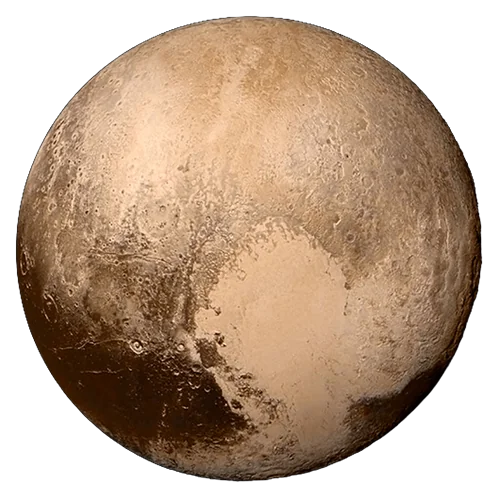
Once considered the 9th planet, Pluto was reclassified as a dwarf planet by the International Astronomical Union (IAU) in 2006 because it had not cleared the area around its orbit. However, we will still refer to Pluto as a planet below.
In order from the Sun, the nine planets are Mercury, Venus, Earth, Mars, Jupiter, Saturn, Uranus, Neptune and Pluto.
Planets Detailed List
| # | Photo | Name |
to the Sun;
Closest Distance Farthest Distance Average Distance (km) |
Diameter
(km) |
Orbit Period
(Earth Days) |
Rotation Period
(Earth Days) |
to the Earth;
Closest Distance Farthest Distance Average Distance (km) |
|---|---|---|---|---|---|---|---|
| 1 |
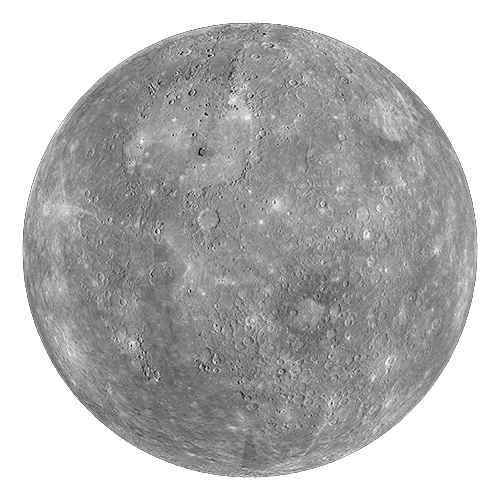
|
Mercury |
46,000,000 69,800,000 57,900,000 |
4,879 | 88 | 58.65 |
77,300,000 221,900,000 155,300,000 |
| 2 |
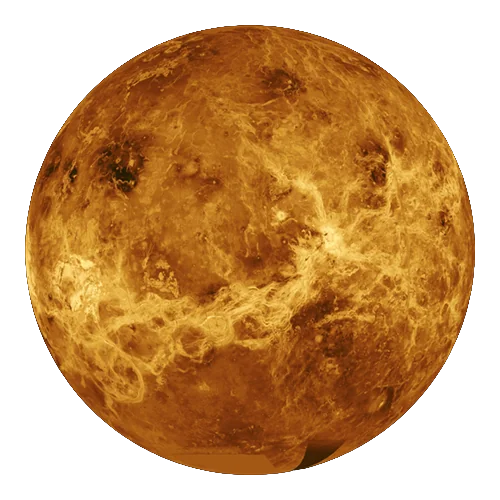
|
Venus |
107,500,000 108,900,000 108,200,000 |
12,104 | 224.70 | 243.02 |
38,200,000 261,000,000 169,900,000 |
| 3 |
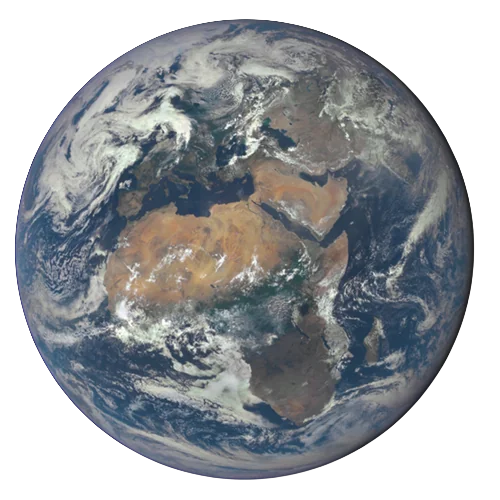
|
Earth |
147,100,000 152,100,000 149,600,000 |
12,756 | 365.20 | 1.00 | |
| 4 |
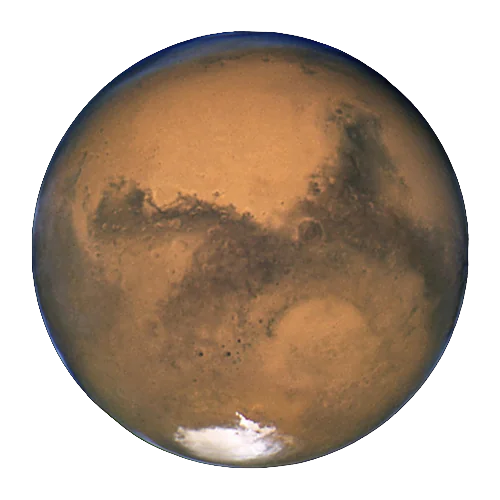
|
Mars |
206,700,000 249,300,000 228,000,000 |
6,792 | 687 | 1.03 |
54,600,000 401,400,000 253,300,000 |
| 5 |
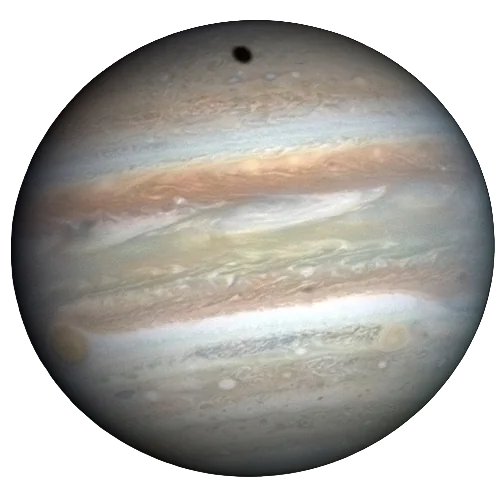
|
Jupiter |
740,600,000 816,400,000 778,500,000 |
142,984 | 4,331 | 0.41 |
588,500,000 968,500,000 785,700,000 |
| 6 |
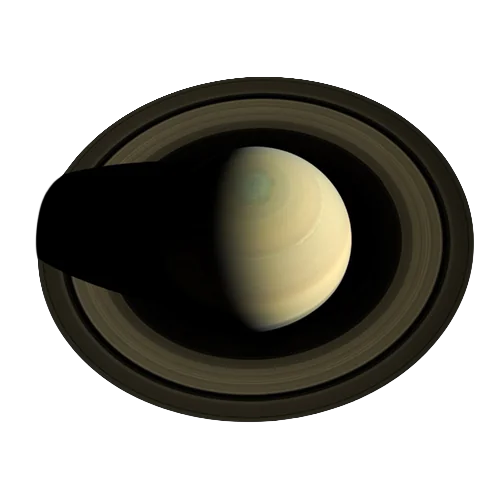
|
Saturn |
1,357,600,000 1,506,500,000 1,432,000,000 |
120,536 | 10,747 | 0.45 |
1,205,500,000 1,658,600,000 1,435,900,000 |
| 7 |
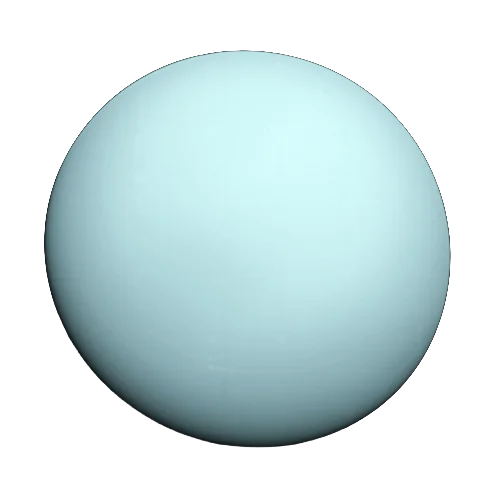
|
Uranus |
2,732,700,000 3,001,400,000 2,867,000,000 |
51,118 | 30,589 | 0.72 |
2,580,600,000 3,153,500,000 2,869,000,000 |
| 8 |
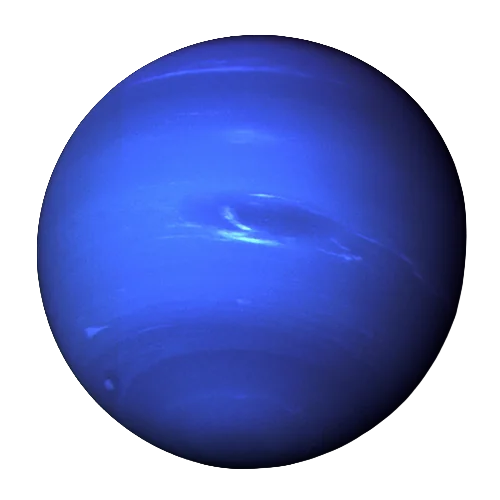
|
Neptune |
4,471,100,000 4,558,900,000 4,515,000,000 |
49,528 | 59,800 | 0.67 |
4,319,000,000 4,711,000,000 4,516,200,000 |
| 9 |
|
Pluto |
4,436,800,000 7,375,900,000 5,906,400,000 |
2,376 | 90,560 | 6.39 |
4,284,700,000 7,528,000,000 5,907,300,000 |
Values are from NASA's Planetary Fact Sheet.[1] The average distance to the Sun is the semi-major axis of the orbit, the midpoint of the closest (perihelion) and farthest (aphelion) distances.[2]
The closest and farthest distances to Earth are calculated from these orbits. They are the theoretical limits, reached when the two planets line up on the same side of the Sun or on opposite sides. The average distance to Earth is not the midpoint of those two values. It is the average over all positions of both planets, calculated with the circular orbit method of a Physics Today study.[3] So on average the planet closest to Earth is Mercury (1.04 AU), not Venus (1.14 AU; 1 AU is about 149.6 million km).[3] Venus is still the planet that comes closest to Earth.[3]
Rotation periods are measured against the stars. Venus, Uranus and Pluto rotate in the opposite direction (retrograde).[1]
Comparison of Planet Sizes
Distances of Earth from Other Planets
Earth - Mercury (Average: 155,300,000 km)
Earth - Venus (Average: 169,900,000 km)
Earth
Earth - Mars (Average: 253,300,000 km)
Earth - Jupiter (Average: 785,700,000 km)
Earth - Saturn (Average: 1,435,900,000 km)
Earth - Uranus (Average: 2,869,000,000 km)
Earth - Neptune (Average: 4,516,200,000 km)
Earth - Pluto (Average: 5,907,300,000 km)
Sources
- Planetary Fact Sheet - Metric, NASA Space Science Data Coordinated Archive (2026-11-13)
- Planetary Fact Sheet Notes, NASA Space Science Data Coordinated Archive (2021-12-20)
- Venus is not Earth's closest neighbor, Physics Today (2019-03-12)